Thursday, February 02, 2006

DoomsDay Clock


WASHINGTON (IWR News Satire) - During his State of the Union Speech, President Bush set the official government Doomsday Clock to midnight and then declared that "the end times are here".

Mr. Bush said it has been his sworn duty to carry out God's will by deregulating the oil industry and refusing to control greenhouse gases and just let the world perish in a catastrophe brought upon by global warming.


More info on the DoomsDay Clock.

Bunny Films

Shoes, shoes, shoes

We are addicted to OIL

Know your neighbors

Canicross


by Mike CallahanPreviously
published in Mushing Magazine
November/December 2001

The term canicross is of European origin. Cross means to move cross country. Canicross is cross country with your dog. Canicross is the sport of running or walking your dog in harness with equipment similar or the same used for skijoring.

Canicross is not simply walking the dog. Running with a dog on a leash is not canicross. In canicross the dog pulls you, just like in skijoring. Your hands are free because your dog is attached at the belt. You need a belt, a line with an integrated shock cord and a harness for the dog. Using ski poles when canicrossing will keep your poling muscles in shape in the off season.

You can double pole or stride with poles, mimicking skate skiing and classic. In the early spring when there are just patches of snow, it is too muddy to use the mountain bike and there is not enough snow to ski. This is the time I like to canicross.

In the fall when there is not enough snow to ski and it is too icy for a wheeled rig a skijorer can still work the dogs canicrossing In the winter, when the snow is late at the trail head, you may need to hike a ways before you put on your skis. With the skis on a backpack and poles in hand you can canicross to the good snow.

When on a hike, you can tap into a little dog power especially on the hills. When hiking I prefer to not use packs on the dogs and will carry any provisions in my own back pack. If you have a comfortable pack it will seem a lot lighter with your dog towing you.Canicross is a good way to start training your leader.

When your dog is well trained , then you can move on to bikejoring, cart or scooter training. Bikejoring should not be attempted until your leader is trained to keep the line out taut. I have used canicross to help train all my dogs. There are a few canicross competitions in Europe. So far in the USA there are foot races that runners run with leashed dogs.

A lot of these races are benefits for animal rescue organizations. Skijor trained dogs adapt well to canicross and will profoundly decrease your mile times if you are already a competitive runner. At a" run with your dog race", an average runner with a good canicross dog can make the podium if his competitors dogs are heeling.

Dog speeds versus Human Speeds

In canicross, the dog is taught to keep tension on the line while traveling at human speeds. For skijorers and mushers it is a good way to train your leaders because you can easily provide corrections when you are on foot.

Canicross is typically a one dog sport. Any more power than one dog is not recommended. A dog that can heel is nice for running down hills. A head halter on a lead is a good device for slowing a dog on the downhill if your dog doesn't heel. Your dog should be accustomed to the halter before you try it in a race.

Fast for a human is five minute miles over a marathon distance. That is 12 miles per hour. Dogs on the other hand can run 12 miles per hour all day long. Sled dogs at the world championship often run 20 miles per hour for over twenty miles. "You are only as fast as your slowest dog" is the old mushers axiom.

The slowest dog on the canicross team is usually the human. Canicross is a human speed sport. Skijoring and sledding are dog speed sports. Canicross will teach your dogs to pull at slower speeds.It may be helpful when climbing steep hills on skis. It can be excellent power training for the dog if you canicross up hills.

Is it detrimental to a dogs speed to train at such a slow pace? Not from my observations. The dog with more canicross time than other team members often seems stronger with no loss in top speed.

Canicross is only one activity you can use your skijor dog for. There is bikejoring, scootering, carting or agility competitions. It is important to free run your dogs also. Regularly let your dogs stretch it out and run at their own speed. To train a dog for dog speeds you can free run your dogs in the off season or use a wheeled rig such as a cart or a mountain bike.

If you have a place you can go where your dog can romp free then that is great exercise for agility and speed. Riding a mountain bike while the dogs run free is good conditioning for the whole team.

Keep Your Dogs Cool

Before I go on I should say something about keeping your dogs cool. Canicross is a warmer weather sport and great care should be taken to monitor your dogs performance. Dogs overheat easily when working in warm temperatures. Know the limits of your dogs and keep them well hydrated.

Huskies run most efficiently when it is considered cold by human standards At 0 degrees F. a husky will run like a ball o fire. At 80 degrees F. a husky will hardly work. Other breeds with shorter coats may be more heat tolerant but you should still be extra careful to provide enough water for your dogs.

Trails that have frequent creek crossings with clean drinkable water are good training routes. Teaching your dogs to swim is good for keeping them cool. If your dog won't swim then a good splashing by the edge of the stream to saturate the coat will rejuvenate your dog.

If the route you chose has no good water then you have to carry water for your dogs. Canicross requires the dog to work, so overheating is always a concern. Working the dogs at daybreak or at night is a good way to avoid overheating. Avoid pavement and mid day sun. Keep the distance conservative.

Methods

There are many approaches to the sport of canicross. If you don't enjoy running, then walking or hiking with your dog in harness may be more appealing. Running canicross takes a little more agility because while running you often have both feet off the ground.

When both feet are off the ground, then you are a little vulnerable when a dog is tugging you. Running downhill when a dog is pulling you is not recommended. Your dog should know the command for easy. The command can be reinforced with a head halter if necessary.

To a dog, a human running is still slow and your dog will rarely break out of a trot into a lope. The lope is a more efficient and faster stride for a dog. When a dog is loping ,all four feet are often off the ground. A dog will break from a trot into a lope at about seven to nine miles per hour.

When walking, you have at least one foot on the ground at all times. Walking allows more solid control of the dog. Try using a pair of old ski poles to keep your arms working and you can bound up mountains with your dog. Hiking canicross is a fun way to cover more ground by harnessing dog power.

Canicross For Training Leaders

Skijorers usually start out with only one or two dogs. These dogs are often the family pets. Unless you buy a trained leader then you must train your own leader. I often hear of mushers talking of this or that dog being born leaders. For the skijorer with one or two dogs, you haven't much choice but to make leaders with what you got.

Without a team available to show your dog what to do, you have to convey the idea yourself, in a method the dog can understand. The first thing you have to teach, is for the dog to just get in front with the line out taut. Even for arctic breed dogs, the act of lining out is not a given.

Teaching your leader prospect to line out might take a little patience. The work pays off after years of using your leader.A good way to start training the "line out" command is to take your dog to a new trail.

The new scenery will set a joyful tone as your dog anticipates every turn. With your belt and line and the dog in harness, encourage the dog to get in front. Don't move down the trail unless the dog is in front. Praise the dog more when she is out front. Whenever the dog naturally lines out, then say the command "line out".

A friend or family member up the trail for the dog to chase is a good incentive for most dogs. Try to always set the dog up to succeed. If the dog only pulls for a few hundred yards then stop the lesson there. Don't expect your dog to pull much at first for any duration. Pulling is hard work for the dog. A sustained effort of pulling requires endurance.

Endurance comes from years of conditioning. If your leader prospect is already a good runner ,don't expect that dog to be a great puller right away. Pulling or working while running is something new, and the dog will need to develop certain muscle groups. Keep the beginning training sessions short. Be consistent and insist on tight lines at all times.

For training commands it is easy to enforce a gee (right) or a ha (left). Corrections are easy because the dog is just a few steps away. Reel the line in, hand over hand and nudge or steer the dog in the right direction while saying the command. Learning to go on by everything is another lesson easily reinforced when on foot.

The "on by" command is used to insist that the dog ignore distractions like varmints or loose dogs when working. It may be hard at first for a dog used to running in a skijor or sled team to slow down to human speeds. The dog may yo-yo and slam into the harness at first. Eventually the dog will learn to lean into the harness at an even pace.

Many mushers and skijorers never bothered to train their dogs to heel. The act of training to heel requires that you discourage pulling with sharp tugs on the collar. To some, the discouraging of pulling seems counter to the objective of mushing. Not a few mushers started in good faith to teach their leader to heel but stopped shortly after thinking , "What am I doing?". That explains why some sled dogs that are otherwise trained well, don't heel.

This leads to a problem controlling the dog on down hills. If possible, you can set the dog loose on the down hill . When setting the dog loose is not an option, then a leash on the collar or a head halter may help slow the dog down. If the dog is pulling on the descent, then you have to hold back to prevent your self from going too fast. Both team members, the dog and the human are wasting way too much energy. It is much easier and faster if the dog is not pulling down hill. This is something you will have to learn to deal with to canicross. When on skis I want the dog to blast off down hill, but in canicross I need the dog to go easy. Most dogs really can rise to this challenge.

Whether training your puppy to pull or if you are going for a serious hike up a mountain, canicross has lot's of potential. Fulfull you and your dogs "off season" from the snow sports and mix it up with a little canicross

Silent Spring


Shades of Rachel Carson.

Mel, Roger, Ruby - glad they live in the US


A dog destined for the dinner table is being thrown into a cage at the Xin Yuan animal market in Guangzhhou, China.

France's Society for the Protection of Animals (SPA) appealed to Chinese President Hu Jintao to put an end to the cruel slaughter of dogs, which it blasted as an affront(AFP/File/Peter Parks)

This would be better

Mush, you huskies!

TITLE: Eskimo boy and his faithful dog, in an igloo
(representing a snow-house)--World's Fair, St. Louis, U.S.A.

CALL NUMBER: LOT 11043-9 [P&P]
REPRODUCTION NUMBER: LC-USZ62-105484 (b&w film copy neg.)No known restrictions on publication.
MEDIUM: 1 photographic print on stereo card : stereograph.
CREATED/PUBLISHED: New York : Underwood & Underwood, publishers, c1904

OPPORTUNITY KNOCKS

01/31/2006
Keith Schmitz

OPPORTUNITY KNOCKS
Are We Going to Chase It Away?

By Keith Schmitz

The Wisconsin State Journal has an article saying that according to Forbes.com FierceBiotech is going to list Wisconsin as one of five emerging biotech hot spots. The only way we can stay on this list is if the state legislature stays out of the way.

Last year Governor Doyle had to veto a bill that could have impacted stem-cell research. The bill was another example of members of the state legislature trying to get in the way of science and job creation.

Supporters of the bill claimed they were not trying to stop stem-cell research, only cloning. However, some legislators tried to amend the bill so it would only ban reproductive cloning.

They failed. Why would they have to amend the bill to protect stem-cell research if the bill didn’t threaten stem-cell research?

This is not the first time the extremists have tried to put the brakes on stem-cell research. It probably won’t be the last. If they are allowed to succeed, Wisconsin could rapidly fall off the list of biotech hot spots.

This not only impacts research companies, but the attorneys, accountants and other services that support these businesses. With manufacturing ebbing here in Wisconsin we’re talking a sector at $2 billion for this state and growing that would spread beyond Madison to other parts of the Badger state. We’re talking extremely good tax-paying jobs and most of all, branding Wisconsin as an innovative place where forward-thinking businesses from other industries go to set up shop.

Many other states have seen the huge job potential in this field and are moving fast to support a biotech industry in their state with taxpayer funds. Supposed “pro-job” legislators should help make sure that Wisconsin doesn’t lose its place.

What’s your take?
Contact Keith Schmitz at: schmitzpr@ameritech.com

Tuesday, January 31, 2006

Jim Short

My heart sank the moment I met him.
He appeared in the doorway suddenly
Like a jack in the box. A tall, nice-looking guy
With a bicycle asking for the housemate
Who I had the terrible crush on. Luckily I found out he was her brother in time to stifle the urge to shove him off the porch.
Turned out he could carry on a reasonably intelligent conversation
About Kung Fu or Doc Savage. Claimed he cut the rug with
Janis Joplin and ate an opium sandwich in Katmandu.
Had a friend who cut the cheese
And another who was an extra in a biker flick.
Kept a pack of scruffy dogs.
Finally found connubial bliss watching Bollywood movies
and reading Hell-boy.
Lucky I didn’t shove him off the porch.

YEAR OF THE FIRE DOG 4704(3)


In the Chinese calendar the year 4704 is the year of the Fire Dog and begins January 29, 2006.

The Chinese character associated with this astrological branch, the 11th of the 12 animals of the Chinese zodiac, is Xu. It pictures a halberd, a martial weapon that looks like an ax on a long pole. This protective image gives us an apt symbol for the nature of the chi associated with the Dog, and some insight into the upcoming year.

The Chinese developed several dog breeds but the one most closely associated with the astrological character is the Chow. No docile family pet, this dog was known for its devotion, loyalty, and ferocious courage in defending its master. In battle it would attack the legs of enemy horses, often snapping them in its jaws, and would stay by the side of its fallen master even after death.

This combination of yin devotion and yang protectiveness, gave the dog a special place in Chinese society as guardian of the home. It is said that dogs protect the home, while pigs take care of the people in it.

In astrological symbolism, the Dog is known for its qualities of loyalty, honesty, faithfulness, and devotion to the protection of friends and loved ones. It has a harmonious relationship to Tiger, Horse, and Rabbit, an oppositional relationship to Dragon, and an argumentative relationship with Rooster.

So what can we expect in the coming year?

In general, all of us can benefit from the clarity gained in the past Rooster year if we now devote ourselves to stewardship of what we truly value. There is no deviousness in the Dog. So, though the year will support hard work and honest effort, the outcome will be better if our agenda aligns with our highest values. Dogs work for home and family, not for personal gain.


1922, 1934, 1946, 1958, 1970, 1982, 1994, 2006

People born in the Year of the Dog possess the best traits of human nature.

  • They have a deep sense of loyalty and are honest.
  • They inspire other people¡¦s confidence because they know how to keep secrets.
  • But Dog People are somewhat selfish, terribly stubborn, and eccentric.
  • They care little for wealth, yet somehow always seem to have money.
  • They can be cold emotionally and sometimes distant at parties.
  • They can find fault with many things and are noted for their sharp tongues.
  • Dog people make good leaders.
  • They are compatible with those born in the Years of the Horse, Tiger, and Rabbit.


Bone Morphogenetic Protein-4 aka BMP-4

Muscle Stem Cells Transformed Into Cartilage
By Ed Edelson
HealthDay Reporter
Mon Jan 30, 5:02 PM ET

MONDAY, Jan. 30 (HealthDay News) -- Researchers say they have turned adult muscle stem cells into cartilage, and used them in animals to heal the kind of damage caused by arthritis.

That is potentially good news for the many people who now face joint-replacement surgery because there is no available technique to repair cartilage damage from osteoarthritis, the wear-and-tear condition that afflicts many older people.

The transformed cells have successfully replaced damaged cartilage in rats for as long as 24 weeks, much longer than has been reported in studies using other methods, according to a report in the February issue of Arthritis & Rheumatism.

Experiments aimed at extending the benefit to 48 weeks are in the planning stage, with an eye out for human trials, said study leader Johnny Huard, director of the Growth and Development Laboratory at the Children's Hospital of Pittsburgh.

"Over the years, a lot of people have tried to use cells to repair cartilage, which doesn't repair by itself," said Huard. "So far, nobody has been able to repair cartilage with those cells. In this study, we found a population of stem cells in skeletal muscle that we give a boost with a protein so they differentiate into cartilage cells. Then we can repair cartilage damage in our animal model."

Discovery of the protein that does the transformation was one of those happy accidents, Huard added. It is bone morphogenetic protein-4 (BMP-4), so named because it has been used for years to make bone cells. A look at the cells thus treated in a different project showed they resembled cartilage cells, and that observation led to the new breed of cartilage cells.

If all works out as hoped, Huard said, treatment of damaged cartilage would start with a biopsy to obtain muscle stem cells from the person needing the treatment. "That is the nice thing about it, because by taking muscle cells from you, we bypass the immune reaction against foreign cells, he said.

The cells would then be grown in culture to create patches for the damaged cartilage.
The experiments described in the journal report used 36 young rats, all with damaged cartilage, who were divided into three groups. One of those groups got muscle stem cells genetically engineered to produce BMP-4, another got plain muscle stem cells, the third just got a coating of glue.

Studies over the next 24 weeks showed repair in the BMP-4 mice, and not in the others.
It's not possible to say when human trials of the transformed cells might start, Huard said. But human trials are underway to test the safety of muscle stem cells against a different condition, bladder dysfunction, which causes embarrassing leakage, he said.

An accompanying editorial by Dr. Mary B. Goldring, of the New England Baptist Bone and Joint Institute, said the study "provides proof-of-principle for performing muscle-derived stem cell implantation in cartilage of humans, since 12-week-old rats are considered to be young adults," and that "further work is warranted" to see if the method works in humans.

More information
More on cartilage and what can go wrong with it is available from the National Library of Medicine.

Primary source: Arthritis & RheumatismSource reference: Kuroda R et al. Cartilage Repair Using Bone Morphogenetic Protein 4 and Muscle-Derived Stem Cells. Arthritis & Rheumatism 2006: 54(2); 433-442.

Monday, January 30, 2006

A Woman's Woman

8 Below

Yes, I know it's a Disney - but oh, the furries, the glorious furries...don't they look like Roger and Ruby with a bit of hard-assed Mel mixed in!

More on the making of this film: http://www.filmjournal.com/filmjournal/features/article_display.jsp?vnu_content_id=1001918372


Inspired by a true story, EIGHT BELOW is an action-adventure about loyalty and the bonds of friendship set in the extreme wilderness of Antarctica.

The film tells the story of three members of a scientific expedition: Jerry Shepard, his best friend, Cooper, and a rugged American geologist, who are forced to leave behind their team of beloved sled dogs due to a sudden accident and perilous weather conditions in Antarctica.

During the harsh, Antarctic winter, the dogs must struggle for survival alone in the intense frozen wilderness for over 6 months.

We need Humor, so it must be Monday


Mel, Roger, Ruby - the bar is lifted!


A Chinese soldier trains a dog by skipping rope at a military base in Nanjing, east China's Jiangsu province

January 28, 2006.
Picture taken January 28, 2006.
CHINA OUT REUTERS/China Daily

Thursday, January 26, 2006

Cartoon by Leo Abbett.

Plastic Princess: Barbie as Art


Plastic Princess: Barbie as Art
November 11, 2005 - February 7, 2006

A multifaceted exhibition that showcases visual, performance and new media artists whose work features one of our most potent and long-lasting (pop-) cultural icons: Barbie®.

It examines the impact of the so-called plastic princess on our culture within the contexts of feminism, gay culture, gender issues, and the use of a commercial symbol and product for purposes of artistic expression.

Artists included are: Leika Akiyama, Kathleen Bitetti, Linda Carney-Goodrich, Crudo, Tom Forsythe, Joe Gibbons, Todd Haynes, Jeffrey P. Heyne, Gwendolyn Holbrow, Richard Leonard, Pia Schachter and Cynthia von Buhler.

Photo: "Malted Barbie" from "Food Chain Barbie" series (1997)/Tom Forsythe"
Photo: "Barbie Enchiladas," from "Food Chain Barbie" series (1997)/Tom Forsythe"
Photo: Pia Schachter, Bulimia, c-print, '01

More photos at: http://www.wbur.org/arts/2006/55245_20060123.asp

Wednesday, January 25, 2006

Qu'Est-il Arrivé !


Roubaix Journal
France Battles a Problem That Grows and Grows: Fat

By ELAINE SCIOLINO
Published: January 25, 2006

Tuesday, January 24, 2006

Hooded Protests and Ben Franklin

Remember your Local Humane Society!


Dakota
Sponsored by: LR
Sponsored: January 7, 2006

I am a 5-year-old Siberian husky mix. Although I'm a bit overweight, I'm still very active. I'd love to be adopted into a forever family that could help get me into prime condition.

The 2005 adoption numbers are in...and it was a great year! Over 7,400 animals found new homes last year. WHS couldn't do it without the support of people like my angel.

Thank you for giving all of us a second chance!

It's Hard to do the Right Thing!


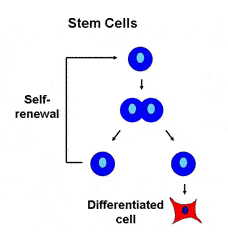
Stem Cells FAQs


New York Times
January 24, 2006
A Conversation With Douglas Melton
At Harvard's Stem Cell Center, the Barriers Run Deep and Wide
By CLAUDIA DREIFUS

CAMBRIDGE, Mass. - To enter his laboratory at the Harvard Stem Cell Institute here, Douglas Melton must use a special key card that electronically checks his identity.

Even before President Bush barred federal financing for most human embryonic stem cell research in August 2001, the work of Dr. Melton was mired in controversy.

And once the ban was enacted, a new set of barriers rose, extending the scientists' challenges far beyond the test tube.

At Dr. Melton's lab, embryonic stem cells from fertilized human eggs are part of a search for a cure to Type 1 diabetes.

Though Dr. Melton's research is privately financed, he must certify that no federal money supports any of his efforts. Hence the key cards. They provide a kind of barrier against people and things that have a federal tie.

"Running a stem cell lab is a little like keeping a kosher kitchen: you've got to really keep things separate," said Dr. Melton, who is 52. "Actually, a kosher kitchen is probably easier."

Q. Last month, after the Korean stem cell cloning scandal broke, a Roman Catholic scientist-theologian, the Rev. Tadeusz Pacholczyk, told The Boston Globe that too many researchers in this renegade branch of science had been playing down the grave ethical concerns for much too long. What is your response?

A. My first response is, There's nothing unethical about what we're doing here. We think embryonic stem cells can be made to become pancreatic beta cells and that they will be able to help diabetics produce their own insulin. I've never once doubted the morality of this work.

This is all about differing religious beliefs. I don't believe I have the right to tell others when life begins. Science doesn't have the answer to that question; it's metaphysical.

Now it's true, we use fertilized human eggs to derive embryonic stem cells. And those fertilized eggs have the potential, under certain circumstances, to become a living person. There are many who believe that there's a moral imperative to use that potential to try to help living sick people.

I hold with them.

Q. You have a child at home with diabetes, right?

A. It's a little bit uncomfortable to talk about this. But it's not a secret. My interest was, for many years, in basic embryology.

When my son, Samuel, was about 6 months old, he came down with Type 1 diabetes, which means that his pancreas couldn't make insulin. About four years ago, my daughter came down with this same disease.

Like any parent, I asked myself, What can I do? The answer was to shift my research to an area that might help them.

I wanted my children to know I was doing everything I could for them.

Q. Does the Korean stem call scandal surrounding the stem cell research of Hwang Woo Suk make your work harder?

A. It has to raise, in the public's mind, the question as to whether there's legitimacy to this kind of science. Fortunately, stem cell research is not dependent on one discovery. Even though Hwang's findings turned out to be fraudulent, nothing he claimed was a fundamental challenge to the principles of embryonic stem cell research.

Hwang claimed to have successfully cloned human embryos, which was only a technical accomplishment. It's something that's already been done in animals.

If you ask me what really holds this research back, I'd say that the policies of the Bush administration have affected us more significantly than the Hwang debacle. The lack of federal support keeps many of America's brightest young scientists from working in this area.

Q. Were you ever skeptical of Dr. Hwang as he reported a succession of breakthroughs in human stem cell research?

A. I'd like to tell you I suspected something. I didn't. When his papers were published, I read them carefully. I was impressed by the speed and the efficiency by which he'd cloned a human embryo. We hadn't done those experiments ourselves. So I didn't know how difficult it would be in humans.

I met Dr. Hwang and his colleagues several times. He didn't seem nutty, squirrely or deceptive or anything like that.

Q. How exactly has President Bush's ban on federal financing for most embryonic stem cell study affected your research?

A. It made it more difficult, to say the least. Long before Bush's speech, we had planned stem cell experiments. Afterward, we were able to go forward because the Howard Hughes Medical Institute, the Juvenile Diabetes Association and Harvard alumni provided private funding.

However, because of administration policy, we had to set up this whole new laboratory that was separate from everything else here at Harvard.

And we had to separate the money in a really scrupulous way. We have an accountant who makes sure that not a penny of federal funds goes to embryonic stem cell research. We have separate everything - light bulbs, computers, centrifuges.

This can be burdensome. Most of the activities at this university receive federal money in some indirect way. So you have to ask yourself, "How can you do the research without any imprint of federal funding?"

And we're not just talking about equipment and real estate; it's people. Let's suppose there's a graduate student who's receiving a federally funded fellowship, can he or she participate in thinking about this research or even look at the data? The answer is no.

Q. Some say that your laboratory's existence proves that the Bush administration's directive didn't stop research in this controversial area. Are they right?

A. Listen, I'm a tenured professor at Harvard, where I have a president who backs my freedom of inquiry - and puts money behind it. If I'd been at a state college, it would have been a different story. Though some states are now keen to support stem cell research, state governments, at first, were very worried.

The bottom line here is that it's unlikely that one person or one lab will solve a problem as big as degenerative diseases, which is what stem cell researchers are trying to do.

It takes a community of people in an area to solve a big problem. If you were trying to solve cancer at two places, no one would think that was enough.

Q. Your lab created 30 stem cell lines and offered them free to any scientist who wanted them. Why?

A. Because in his speech, President Bush said that he was going to permit federal funding for scientists to work with some 60 pre-existing stem cell lines and it turned out that there were probably only about 10 usable lines. Maybe a few more.

And many of those were problematic. Some had abnormal chromosomes, like a cancer cell might. If you're using stem cells to create pancreatic beta or muscle or nerve cells, you want to begin with high-quality normal cells.

All the pre-existing lines were grown with mouse cells - which probably means you can't ever use them with human patients to treat diseases. Some of the lines, when researchers asked for them, came from a biotech company or some investigator who wanted to impose onerous restrictions on their use.

So we made our cell lines because we thought there aren't enough human stem cell lines around for researchers to really explore their properties.

We offered them free of charge because there's a long scientific tradition of making the fruits of one's research available to others.

Q. How far have you gotten in your quest to find a way to make pancreatic cells that will produce insulin for patients?

A. I'd say we've made progress. We don't know exactly how much because we don't yet know how many pieces there are in the puzzle we're trying to solve. I'm an optimist, though. I don't think we'll fail.


Monday, January 23, 2006

Bushisms


A neat place, check it out: http://www.internetweekly.org/


The Nation

Finally, it has started. People have begun to speak of impeaching President George W. Bush--not in hushed whispers but openly, in newspapers, on the Internet, in ordinary conversations and even in Congress. As a former member of Congress who sat on the House Judiciary Committee during the impeachment proceedings against President Richard Nixon, I believe they are right to do so.

I can still remember the sinking feeling in the pit of my stomach during those proceedings, when it became clear that the President had so systematically abused the powers of the presidency and so threatened the rule of law that he had to be removed from office. As a Democrat who opposed many of President Nixon's policies, I still found voting for his impeachment to be one of the most sobering and unpleasant tasks I ever had to undertake. None of the members of the committee took pleasure in voting for impeachment; after all, Democrat or Republican, Nixon was still our President.

At the time, I hoped that our committee's work would send a strong signal to future Presidents that they had to obey the rule of law. I was wrong.

Like many others, I have been deeply troubled by Bush's breathtaking scorn for our international treaty obligations under the United Nations Charter and the Geneva Conventions. I have also been disturbed by the torture scandals and the violations of US criminal laws at the highest levels of our government they may entail, something I have written about in these pages [see Holtzman, "Torture and Accountability," July 18/25, 2005]. These concerns have been compounded by growing evidence that the President deliberately misled the country into the war in Iraq. But it wasn't until the most recent revelations that President Bush directed the wiretapping of hundreds, possibly thousands, of Americans, in violation of the Foreign Intelligence Surveillance Act (FISA)--and argued that, as Commander in Chief, he had the right in the interests of national security to override our country's laws--that I felt the same sinking feeling in my stomach as I did during Watergate.

As a matter of constitutional law, these and other misdeeds constitute grounds for the impeachment of President Bush. A President, any President, who maintains that he is above the law--and repeatedly violates the law--thereby commits high crimes and misdemeanors, the constitutional standard for impeachment and removal from office. A high crime or misdemeanor is an archaic term that means a serious abuse of power, whether or not it is also a crime, that endangers our constitutional system of government.

The framers of our Constitution feared executive power run amok and provided the remedy of impeachment to protect against it. While impeachment is a last resort, and must never be lightly undertaken (a principle ignored during the proceedings against President Bill Clinton), neither can Congress shirk its responsibility to use that tool to safeguard our democracy. No President can be permitted to commit high crimes and misdemeanors with impunity.

But impeachment and removal from office will not happen unless the American people are convinced of its necessity after a full and fair inquiry into the facts and law is conducted. That inquiry must commence now.


Read the rest at The Nation:

http://www.thenation.com/doc/20060130/holtzman

The Impeachment of George W. Bush
by ELIZABETH HOLTZMAN
[from the January 30, 2006 issue]

The NationMart


With memorable artwork by John Carr, this image appeared on The Nation's cover on September 13, 2002 and became an instant classic.

Vomit

President Bush continues practice of taking audience questions

From today's cnn.com online article, just the most nauseating of the quotes:

He also ruled out any future run for office by his wife, Laura, in response to a plea from a fan who called her "one of the best first ladies we've ever had." And he disclosed that Mrs. Bush designed the rug in the Oval Office.

Bush has taken a wide variety of questions in three appearances during the last six weeks. Many of the people he has called on have fawned over him, thanking him for his wartime leadership, saying they pray for him and bringing best wishes from other fans in their family who couldn't be there.

Friday, January 20, 2006

Sunday, January 15, 2006

Grasshopper


A dog sports a costume of a grasshopper, by a Russian designer Valentina Mokrushina during a dog fashion show in the Russia's southern city of Stavropol.

December 21, 2005.
REUTERS/Eduard Korniyenko

Tuesday, January 10, 2006

Bush Explains Medicare Drug Bill


WOMAN IN AUDIENCE: 'I don't really understand. How is it the new plan going to fix the problem?'

Verbatim response: PRESIDENT BUSH:

'Because the -- all which is on the table begins to address the big cost drivers. For example, how benefits are calculated, for example, is on the table. Whether or not benefits rise based upon wage increases or price increases. There's a series of parts of the formula that are being considered. And when you couple that, those different cost drivers, affecting those -- changing those with personal accounts, the idea is to get what has been promised more likely to be -- or closer delivered to that has been promised. Does that make any sense to you? It's kind of muddled. Look, there's a series of things that cause the -- like, for example, benefits are calculated based upon the increase of wages, as opposed to the increase of prices. Some have suggested that we calculate -- the benefits will rise based upon inflation, supposed to wage increases. There is a reform that would help solve the red if that were put into effect. In other words, how fast benefits grow, how fast the promised benefits grow, if those -- if that growth is affected, it will help on the red.'

Artwork from: http://www.dc37.net/news/PEP/6_2005/medicareD.html

Thursday, January 05, 2006

Live in NY?

You Know You're From New York (tug and little m., is this TRUE?)

When... You're 35 years old and don't have a driver's license.

You ride in a subway car with no air conditioning just because there are seats available.

You take the train home and you know exactly where on the platform the doors will open that will leave you right in front of the exit stairway.

You know what a "regular" coffee is.

It's not Manhattan...... It's the "city".

There is no north and south. It's "uptown" or "downtown."

If you're really from New York you have absolutely no concept of where north and south are....

And east or west is "crosstown."

You cross the street anywhere but on the corners and you yell at cars for not respecting your right to do it.

You move 3,000 miles away, spend 10 years learning the local language and people still know you're from Brooklyn the minute you open your mouth.

You return after 10 years and the first foods you want are a "real" pizza and a "real" bagel.

A 500 square foot apartment is large.

You know the differences between all the different Ray's pizzas.

You are not under the mistaken impression that any human being would be able to actually understand a p.a. Announcement on the subway.

You wouldn't bother ordering pizza in any other city.

You get ready to order dinner every night and must choose from the major food groups which are: Chinese, Italian, Mexican or Indian.

You're not the least bit interested in going to Times Square on New Year's eve.

Your internal clock is permanently set to know when alternate side of the street parking regulations are in effect.

Someone bumps into you, and you check for your wallet.

You don't even notice the lady walking down the road having a perfectly normal conversation with herself.

You pay "only" $230 a month to park your car.

The presidential visit is a major traffic jam, not an honor.

You can nap on the subway and never miss your stop.

The deli guy gives you a straw with any beverage you buy, even if it's a beer.

Wednesday, January 04, 2006

Happy Hoyan


Posted Jan. 01, 2005
By Lee Reinsch
Gannett Wisconsin Newspapers

Oneida custom helps celebrate New Year’s Day
Tribe members visit homes, greet with ‘Hoyan’


It’s the holiday season and along with cheerful greetings of Merry Christmas, Happy Hanukkah, Happy Kwanzaa and Happy New Year is one you might not have ever heard — Happy Hoyan!

Hoyan is a traditional New Year’s festival celebrated by the Oneida during which tribe members visit each other’s homes where delicious treats are laid out for them to eat and drink. They greet each other with Happy Hoyan or simply, Hoyan.

“On New Year’s Day, my grandfather and neighbors would take the sleigh and horses, and we’d go from one home to another,” said Pearl McLester, an Oneida.

“The houses were few and far between then, and we greeted each other with, ‘Hoyan!’ They’d invite us in for something hot to drink and doughnuts. Homemade doughnuts.”

There was always something hot waiting for visitors. For children, “something hot” meant cocoa, and for adults, tea.

“People had more tea back then than they had coffee years ago,” McLester said. “Today, people go for a sleigh ride or a hayride, and they take bobsleds that are full of hay, so they stay warm.”

This holiday season, McLester and her family will hold their own Hoyan celebration at the parish hall, with Indian corn soup, homemade doughnuts and “something hot to drink.”

The family of Oneida member Barbara Skenandore has made and handed out homemade banana doughnuts for more than three generations. “We’ve been doing this since I was very little,” Skenandore said.

“My mom did it and my grandmother before her did it,” Skenandore said.

“We have them ready by 7 a.m. New Year’s Day. It usually goes till around 1 p.m.”

They get the doughnuts ready and wait for people to knock on the door and yell, “Hoyan!” she said.

Skenandore said she believes the word Hoyan means “and again,” or “and another,” as in another year.

Jerry Hill, an Oneida, said Hoyan has always been something not to be missed.

“The kids would get hot chocolate or cookies. It was always a fun thing, as cold as it was, we’d be sure to make the trip down the road,” Hill said. “Of course, there were always a couple people who always had the best cookies — big and thick with frosting, all decorated with Santas or Christmas trees.”

Lee Reinsch writes for the Green Bay Press-Gazette.

hmmmmmmmmmmmm


A woman goes to the doctor for her yearly physical.

The nurse starts with certain basic items.
"How much do you weigh?" she asks.
"115," she says.
The nurse puts her on the scale. It turns out her weight is 150.

The nurse asks, "Your height?"
"5 foot 8," she says.
The nurse checks and sees that she only measures 5' 3".

She then takes her blood pressure and tells the woman it is very high.
"Of course it's high!" she screams,
"When I came in here I was tall and slender! Now I'm short and fat!"

Grind my Teeth!


Quoted from Maureen Dowd's New York Times column, dated 1-4-2006:

And since the imperial presidency is run by the vice president, W. has a lot of free time to do the things he likes to do. Confined with his wife and mother-in-law at the Crawford ranch, he spent his Christmas vacation mountain-biking and clearing brush.

He left the ranch for a brief visit at Brooke Army Medical Center in San Antonio, where he kidded in a way that again showed his jarring lack of empathy with the amputees from Iraq and Afghanistan:

"As you can possibly see, I have an injury myself - not here at the hospital, but in combat with a cedar. I eventually won. The cedar gave me a little scratch. As a matter of fact, the colonel asked if I needed first aid when she first saw me. I was able to avoid any major surgical operations here, but thanks for your compassion, colonel."

Tuesday, January 03, 2006

Animal Cell-Free Stem Cell Lines

01/01/06

WISCONSIN SCIENTISTS GROW TWO NEW STEM CELL LINES IN ANIMAL CELL-FREE CULTURE

MADISON - Scientists working at the WiCell Research Institute, a private laboratory affiliated with the University of Wisconsin-Madison, have developed a precisely defined stem cell culture system free of animal cells and used it to derived two new human embryonic stem cell lines.

The new work, which is reported today (Jan. 1, 2006) in the journal Nature Biotechnology, helps move stem cells a small step closer to clinical reality by completely ridding the culture medium in which they are grown of animal products that could harbor viruses or other deleterious agents.

Successfully growing living cells outside the body generally requires providing the cells in a lab dish with the right mix of nutrients, hormones, growth factors and blood serum. But those methods have often depended on animal cells - such as those obtained from mouse embryos in the case of embryonic stem cells - and other animal products to keep the cells alive and thriving in culture. Some scientists worry that animal viruses and other problematic agents might be taken up in the human cells and infect human patients, should those cells be used for therapy.

"All of the concerns about contaminating proteins in existing stem cell lines can essentially be removed using this medium," says the Nature Biotechnology paper's lead author, Tenneille Ludwig, a UW-Madison research scientist working at WiCell who led the effort to develop the
new culture media. "This work helps us clear some of the major hurdles for using these cells therapeutically."


"We've been optimizing (culture) media on the existing stem cell lines since 1998, but it has only been recently that there have been dramatic improvements," says James Thomson, the senior author of the new study and a UW-Madison professor of anatomy who seven years ago was the first to successfully grow human embryonic stem cells in the lab. "This is the first time it has been possible for us to derive new cell lines in completely defined conditions in medium that completely lacks animal products."

Other groups, Thomson notes, have cultured established human embryonic stem cells in animal-product free media, but those efforts included the use of poorly defined or proprietary products, and no one has previously demonstrated derivation of new cell lines in defined conditions.

The two new Wisconsin stem cell lines have survived for more than seven months in the new culture medium. Thomson says one of the new lines had an abnormal chromosome at four months, while the second line initially was normal but developed an abnormality by seven months.

In addition to testing the new stem cell culture medium on new lines, Thomson's group successfully cultured four existing stem cell lines in the new culture mix for extended periods, and their chromosomes remained normal.

"It is unclear how much these changes are related to the medium at this point, as we have occasionally observed similar changes in previous culture conditions," he says. "However, these changes do indicate that that further work is needed to understand chromosome stability of stem cells during long-term culture."

In early 2005, WiCell scientists reported that they were able to culture stem cells in the absence of mouse feeder cells, the most prominent animal product in stem cell culture systems. The new work effectively removes remaining animal products such as bovine serum and replaces them
with products of human origin in a recipe that is completely defined.

But while the new Wisconsin work represents an important advance for stem cell technology, the ability to now grow embryonic stem cells in cultures free of animal products could accentuate the debate over federal funding for research on additional stem cell lines. The Senate is expected to take up the issue early in 2006 when it debates legislation that would expand funding to lines derived after August 2001, when President Bush imposed a compromise enabling federal funds to be used for the first time to study a limited number of established stem cell lines.

"Derivation and culture in serum-free, animal product-free, feeder-independent conditions mean that new human (embryonic stem) cell lines could be qualitatively different from the original lines, and makes current public policy in the United States increasingly unsound,"
the authors of the new Nature Biotechnology report conclude.

While the 2001 compromise effectively opened up the field of embryonic stem cell research in the United States, researchers have been calling for expanding the number of lines approved for federal funding because existing lines have been shown to accumulate genetic mutations that, while not a serious impediment to scientific research, make the lines questionable for therapeutic use. What's more, some scientists say additional lines are needed to ensure broad diversity in order to better match patients with cells and gain a more comprehensive understanding of disease as it affects people with different genetic backgrounds.

The original five stem cell lines derived by Thomson in 1998, like many subsequently derived lines, depend on tissue culture technology that was established in the 1950s. In addition to mouse feeder cells obtained from mouse embryos, the original embryonic stem cell cultures depended on bovine serum products.

The two new Wisconsin stem cell lines were derived from five blastocysts, embryos less than a week old and which were donated for research with the informed, written consent of patients who were no longer undergoing treatment for infertility. The experiments were reviewed and approved by the UW-Madison's institutional review board, a panel that oversees work with human subjects.

All of the work to derive the new stem cell lines was conducted at the privately funded, not-for-profit WiCell Research Institute using WiCell employees, facilities and equipment.

WiCell is operated by the Wisconsin Alumni Research Foundation (WARF), a private, not-for-profit organization that manages intellectual property on behalf of UW-Madison faculty and staff researchers. WARF holds the patents for stem cell technology based on Thomson's pioneering stem cell ork.

The only thing left is green tea!


Jan 3, 4:26 PM EST

Studies: Statins Don't Lower Cancer Risk
By CARLA K. JOHNSON
Associated Press Writer

CHICAGO (AP) -- Two new studies deal a double blow to hopes that cholesterol-lowering statin drugs could help prevent cancer as well as heart disease.

In one report, researchers analyzed 26 rigorous, randomized studies involving more than 73,000 patients and concluded that drugs such as top-selling Lipitor and Zocor had no effect on the risk of developing or dying from any form of cancer.

The findings appear in Wednesday's Journal of the American Medical Association.

The other study, published in the Journal of the National Cancer Institute, found that cholesterol-lowering drugs, including statins, were of no benefit for preventing colorectal cancer.

"We were very hopeful that we would verify there was an anti-cancer effect," said C. Michael White of the University of Connecticut School of Pharmacy, who led the analysis appearing in JAMA. "We ended up showing no change in cancer or cancer death."

White said the new findings - as well as the rare but potential side effects of statins, which can include liver damage and muscle pain - should discourage doctors from prescribing them solely to prevent cancer.

People should continue taking them to lower cholesterol and prevent heart attacks, he said. "It really is a great drug for heart disease," White said.

Hope for statins as cancer fighters was sharpened by the fact that so many people already take them to lower cholesterol and the drugs are widely considered safe. Previous research, including animal studies and observational studies of people, had suggested statins might prevent various types of cancer.
For example, researchers looked at medical records for 1.4 million patients treated at 10 Veterans Affairs centers and found that those taking statins had lower rates of breast, prostate and lung cancer than those who hadn't taken such drugs.

And a study of Israeli patients published earlier this year showed a 47 percent lower risk of colorectal cancer in people who used statins for at least five years.

However, these were not randomized studies - meaning patients were not randomly picked to receive statins and then studied to see what effects the drugs had. Researchers consider randomized studies to yield the best evidence.

The colorectal cancer study was observational - the weakest sort of evidence - but very large. Researchers found no link between statin use and colorectal cancer when they looked at data on more than 132,000 people enrolled in the cancer prevention study.

In an accompanying editorial, John McLaughlin of the Prosserman Centre for Health Research in Toronto, wrote "... it remains premature to conclude that a large chemoprevention trial with statins that is aimed at reducing colorectal cancer risk is warranted."

White also believes it is time to stop spending money on more studies of cancer and statins.

However, Dr. Stephen Gruber of the University of Michigan, who led the Israeli study, said the new analysis is valuable but suggests that more research is needed.

"When you see contrasting conclusions like this, it's often an opportunity to learn more," Gruber said.

Not GWB


"WISDOM--Contains knowledge, understanding, patience, intuition and a dash of skepticism."

Top 10 GWB New Year's Resolutions


Top Ten George W. Bush New Year's Resolutions
From the "Late Show with David Letterman"

10. Fewer decisions based on wild, drunken hunches

9. Have N.S.A. find out what really happened between Nick and Jessica

8. Stop using Situation Room monitors to play X-Box 360

7. More C-SPAN, less "Yes, Dear"

6. Team up with leading scientists to make Cheetos even cheesier

5. To capture and bring to justice King Kong

4. Beat the twins at beer pong

3. Respond to reporters questions with, "Bitch, don't go there"

2. Scale back on grueling 12-hour work week

1. "Who needs resolutons? Everything is fine"